
db Orlando Collision East has published new consumer guidance explaining how certain collision repairs can involve factory foams and cavity materials located within vehicle body structures. The October resource focuses on why materials that are largely hidden from view can become relevant when collision repairs involve body panels, enclosed sections, joints, or other areas where manufacturers use specialized materials as part of vehicle construction.
The guidance expands on db Orlando Collision East’s auto body repair information by addressing an aspect of collision repair that vehicle owners may never see during an initial inspection. While exterior panels, paint damage, dents, and deformation are readily visible, some vehicle construction materials are positioned inside cavities or between body components.
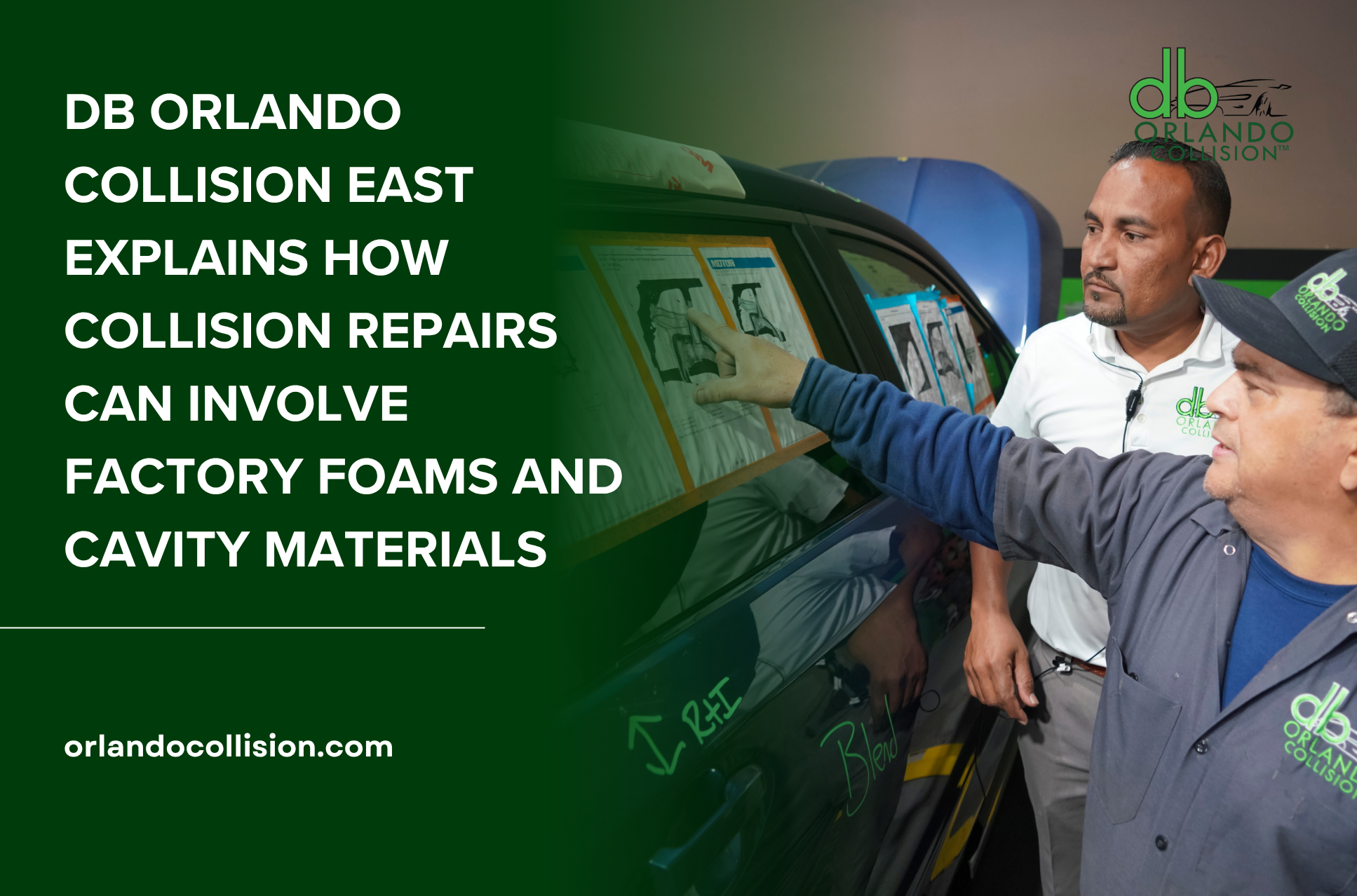
Depending on the vehicle, manufacturers can use foams, cavity materials, sealers, adhesives, and other products within specific areas of the body. Their locations, characteristics, and purposes can vary significantly by make, model, model year, and component.
The October guidance emphasizes that these materials should not be treated as interchangeable products or assumed to be present in the same locations on every vehicle. Vehicle-specific repair information can help technicians identify the materials associated with an affected area and determine whether particular procedures apply when that area is repaired.
Factory foams provide one example. Certain vehicle body areas can contain foam materials positioned within enclosed sections or between components. These materials can serve different purposes depending on the vehicle design, including helping manage sound, vibration, or other characteristics of the body assembly.
A collision does not automatically mean these materials have been damaged. Their relevance depends on the location of the impact and the repair operations required for the affected component.
For example, exterior damage to a body panel may be repairable without disturbing an adjoining cavity. A different collision may require removal or replacement of a component that provides access to an area containing factory-applied material. The repair plan can account for that distinction rather than treating every panel repair as requiring the same internal operations.
Cavity materials represent another consideration. Vehicle bodies contain enclosed or partially enclosed areas that are not readily visible from the exterior. Depending on vehicle construction, manufacturers may specify materials within these areas as part of the original assembly or corrosion-protection strategy.
When collision repairs disturb a component associated with one of these areas, technicians can review applicable procedures to determine whether restoration of a specified material is part of the repair.
This makes access an important part of the evaluation. During an initial exterior inspection, technicians may be able to document the visible deformation of a quarter panel, rocker area, pillar, or other body component without having complete access to the internal side of the assembly.
Repair planning and appropriate disassembly can provide additional information about the construction of the affected area. The purpose of gaining access is not to presume that concealed materials require replacement. It allows the repair plan to be based on the actual component configuration and the procedures associated with the work being performed.
The October publication also distinguishes factory foams and cavity materials from the visible cosmetic aspects of auto body repair. Restoring the shape and finish of an exterior panel is one part of the repair process. When a repair operation affects materials located behind or within that panel, those materials can represent a separate technical consideration.
This distinction becomes particularly relevant when a damaged component requires replacement rather than an exterior-only repair. Component removal can expose joints, enclosed sections, attachment locations, and other areas that were not visible during the initial assessment.
The replacement process can therefore involve more than installing a new exterior panel and refinishing its visible surface. Applicable vehicle-specific information can identify additional materials or operations associated with the component and its surrounding construction.
db Orlando Collision East provides additional context about vehicle-specific repair considerations through its OEM certification information. Manufacturer repair procedures can help identify component construction, joining methods, material locations, precautions, and restoration requirements associated with the individual vehicle.
The guidance also explains why technicians should distinguish among the different materials encountered during body repair. Foam, seam sealer, adhesives, and cavity-protection materials can perform different functions and can have different application requirements.
Their appearance or location alone does not establish that one product can substitute for another. The material specified for a particular repair can depend on how the vehicle was constructed and the requirements associated with the affected component.
This vehicle-specific approach is particularly important because two vehicles with similar exterior collision damage may have different construction beneath the visible surface. A damaged area on one model may contain a particular factory material, while a comparable area on another vehicle may use a different design or repair procedure.
Even within the same vehicle, construction can vary from one body area to another. Materials used around a rocker, pillar, quarter panel, roof rail, or another enclosed section may not be identical or serve the same purpose.
Repair planning therefore begins with identifying the individual vehicle and affected component rather than applying a universal approach based solely on the location of the visible dent.
The October resource also addresses the relationship between collision damage and material removal. Certain repair operations can require cutting, drilling, welding, heating, separating joined components, or performing other procedures around a damaged area. When applicable, technicians can review manufacturer information for precautions involving nearby materials before those operations begin.
This can be relevant both to the repair procedure itself and to the sequence in which the work is completed. Access, component removal, joining operations, material restoration, refinishing, and final assembly may need to occur in an appropriate order based on the vehicle and repair.
The guidance does not suggest that every collision repair requires technicians to replace factory foam or apply cavity materials. Many repairs may not disturb areas containing these products at all.
Instead, the October publication identifies the circumstances that can make these materials relevant. The collision location, component being repaired or replaced, extent of required access, original vehicle construction, and applicable manufacturer procedures collectively determine whether additional material-related operations become part of the repair plan.
This distinction also helps consumers understand why repair documentation can include materials that were not visible when the damaged vehicle was initially inspected. A repair estimate can begin with readily identifiable exterior conditions, while later repair planning and technical research can identify additional operations associated with the construction of the affected area.
These operations do not necessarily represent newly occurring damage. They can reflect the procedures and materials required to complete the documented repair according to the individual vehicle’s construction.
The October guidance organizes the issue around three stages. Technicians first identify the damaged component and determine how the affected area is constructed. They then review whether the planned repair will disturb factory-applied materials or enclosed areas associated with that component. Applicable vehicle-specific procedures can then establish how those materials are addressed as part of the repair.
This framework gives consumers a clearer distinction between visible collision damage and the less-visible construction details that can influence how that damage is repaired.
Factory materials can also intersect with corrosion protection. When a repair operation exposes or affects internal metal surfaces, applicable procedures may include restoration of protective materials in areas that will become difficult to access after the vehicle is reassembled.
The specific product, location, preparation, and application requirements depend on the vehicle and repair procedure. The October resource therefore avoids treating cavity protection as a generic coating applied uniformly to every repaired vehicle.
The same principle applies to foam materials. Their presence does not automatically establish a required operation. The repair process first determines whether the affected component contains or interacts with the material and whether the work being performed disturbs the relevant area.
For consumers, this provides additional context for why modern auto body repair can include materials and procedures that are not obvious from looking at the finished exterior. Once a repaired vehicle is reassembled and refinished, many of the internal areas involved in the work are again concealed from view.
Additional information about the Orlando facility is available through the db Orlando Collision East location.
The October publication adds a factory-material-specific topic to db Orlando Collision East’s broader consumer repair information. Its central point is that collision repair can involve both visible components and materials incorporated within vehicle construction. When a repair affects an area containing factory foams, cavity materials, or related products, vehicle-specific information can help determine which materials and procedures apply.
db Orlando Collision East provides collision and auto body repair services for Orlando-area vehicle owners. The East facility supports repair planning, body and structural repair, refinishing, and manufacturer-specific collision repair procedures. db Orlando Collision East is located at 2591 N Forsyth Rd Unit D, Orlando, FL 32807, United States.
###
For more information about db Orlando Collision - East, contact the company here:
db Orlando Collision - East
Drew
407-467-5930
Drew@orlandocollision.com
2591 N Forsyth Rd unit d, Orlando, FL 32807, United States