
Ed’s Collision 1 is publishing consumer guidance that gives vehicle owners a clearer framework for understanding rear quarter panel damage after a collision. The guidance focuses on four factors that can influence whether a quarter panel is repaired or replaced: damage severity and location, vehicle-specific panel construction, adjoining component damage, and access to the complete collision area.
Information about the facility is available through the Ed’s Collision 1 Maple Grove location page.
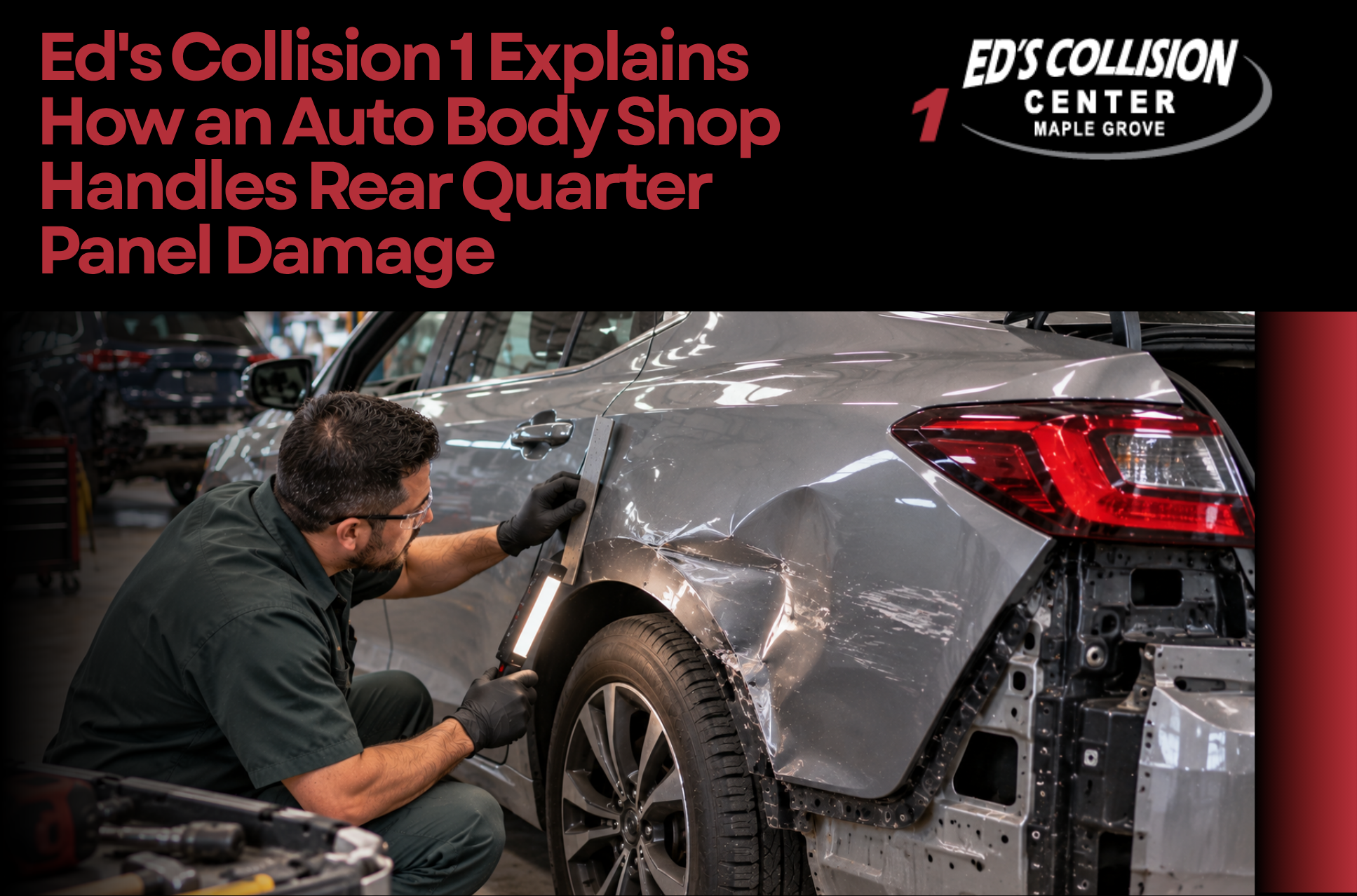
Rear quarter panels typically surround the rear side of a passenger vehicle and meet several other exterior areas, including the wheel opening, rear bumper, lamp area, rear door, and trunk or liftgate opening. Because these components are positioned close together, the most visible dent may not provide enough information to determine the repair approach. Pasted markdown
Damage severity and location provide the first consideration. A broad, shallow dent can present different repair conditions from a sharp crease, torn area, or substantial deformation. Damage around a wheel opening, body line, panel edge, or attachment area can also affect the available repair options.
Through auto body repair services, technicians can evaluate the panel's material, condition, accessibility, finish, and damage location before determining whether the original quarter panel remains suitable for repair.
Vehicle construction is the second factor. Unlike some bolt-on exterior components, a rear quarter panel may be integrated into the vehicle body using joining methods specified for the particular make, model, and model year. When replacement is necessary, manufacturer repair information can identify the applicable attachment locations, joining methods, and replacement procedures for that vehicle.
This helps explain why two vehicles with similar-looking quarter panel damage can require different repair operations.
The third consideration is the condition of adjoining components. A rear-corner impact can affect the relationship between the quarter panel, bumper, lamp, and trunk or liftgate opening. A side impact can alter the wheel-opening area or the visible gap between the quarter panel and rear door.
For example, a bumper edge that has pulled away from the quarter panel does not automatically establish that the quarter panel caused the changed fit. Bumper retainers, brackets, tabs, or mounting areas may also be involved. The affected components can be evaluated before repair or replacement decisions are finalized.
Access to the collision area provides the fourth consideration. Interior trim, wheel-opening liners, lamps, bumper components, and cargo-area pieces can restrict access to portions of the quarter panel and its attachment areas.
When necessary, applicable components can be removed so technicians can examine previously concealed areas. Additional access does not mean concealed damage will always be found. It allows the repair plan to reflect conditions that can actually be documented.
When conventional quarter panel repair is appropriate, the physical deformation is addressed before surface preparation and refinishing. If replacement is required, the replacement panel can also require fitting, preparation, joining, and refinishing according to the vehicle and repair procedure.
Modern vehicles may also contain parking sensors, wiring, cameras, or other electronic equipment near rear bumper and quarter panel areas. Their presence does not automatically require the same electronic procedures for every repair. The specific vehicle, collision damage, and operations performed determine what additional steps apply.
When the impact involves several areas, the collision repair process can account for the documented damage to the quarter panel and neighboring components within one repair plan.
The October guidance is intended to clarify a central point for vehicle owners: rear quarter panel damage is not automatically a repair or replacement situation based on dent size alone. The panel's construction, damage location, adjoining components, and accessible findings all contribute to that decision.
Drivers can assist the evaluation by reporting visible changes such as loose wheel-opening trim, altered panel gaps, a displaced bumper corner, or different trunk, liftgate, or rear-door operation after the collision.
Ed’s Collision 1 is located at 10758 County Rd 81, Maple Grove, MN 55369. The Maple Grove facility provides auto body and collision repair services as part of Collision Center 1.
###
For more information about Ed’s Collision 1, contact the company here:
Ed’s Collision 1
Jerald Stiele
(763) 425-0077
EdsCollisionCC@gmail.com
10758 County Rd 81, Maple Grove, MN 55369