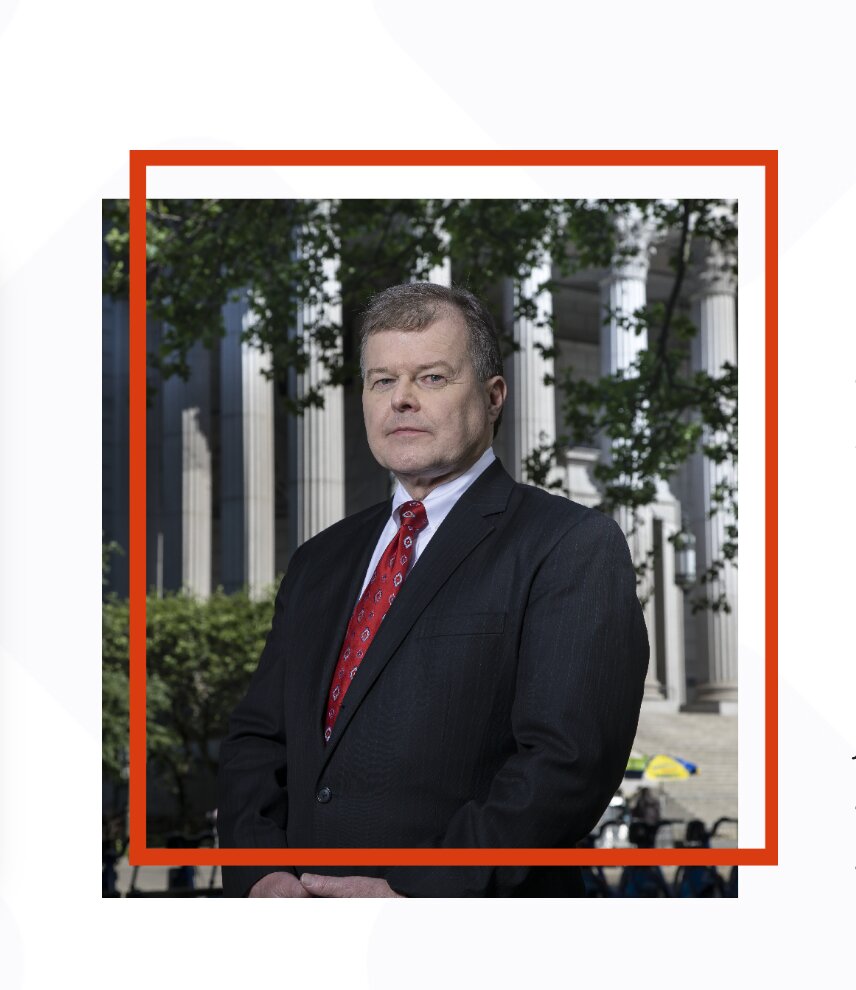
In a wide-ranging interview recorded at the American Association for Justice Winter Convention at the Hotel del Coronado in Southern California, New York trial attorney Nicholas Timko sat down with legal news reporter Rene Perras for the latest edition of Coffee With Q's Elite Legal Professional series. Timko, who serves on the AAJ Board of Governors representing New York and previously led the New York State Trial Lawyers Association as its president, did not hold back. He laid out a direct warning: powerful interests are working to strip Americans of their Seventh Amendment right to a civil jury trial, and the method is quieter than most people realize.
The full interview is available at: https://www.coffeewithq.org/elite-legal-professionals-nicholas-timko-with-rene-perras/
The Seventh Amendment Is Being Gutted Through the Back Door
Timko opened the interview with a blunt assessment of where the American civil justice system is headed. The Seventh Amendment guarantees every citizen the right to a jury trial in civil matters, but according to Timko, there is an organized effort to make that right meaningless in practice. The strategy is not to repeal the amendment outright. It is to cap attorney fees for plaintiffs' lawyers so severely that representing injured people becomes economically impossible.
"They're trying to prevent you from obtaining legal representation because they know that if they make it economically unfeasible for someone to hire a lawyer, they won't have representation, they won't have claims, and they basically get away with whatever they're trying to get away with, which is needlessly injuring people and not having accountability," Timko told Coffee With Q.
The fee caps, Timko noted, are designed to apply only to attorneys representing injured plaintiffs, not to the defense lawyers hired by corporations and insurance companies. The result, he argued, is an indirect shutdown of the civil justice system.
Why Premise Liability Cases in New York City Require Specialized Knowledge
The conversation shifted to the specific challenges of premise liability law in New York City, an area where Timko has spent the bulk of his career. Slip, trip, and fall cases in NYC are not as straightforward as most people assume. Timko explained that the city's building stock spans more than a century, and the applicable building code depends on when the structure was built. A building erected in 1905 may be grandfathered under the 1936 code rather than the modern international building code adopted in the late 1990s and 2000s.
That distinction matters enormously in court. Defendants routinely argue that an older building does not need ramps, proper handrails, or stair treads that meet modern safety standards because it was built under a prior code. If an attorney does not understand which code applies, or fails to identify exceptions that could bring an old building under updated requirements, the case can be thrown out before it ever reaches a jury.
"If attorneys don't understand this, if they don't look to establish when the building was built or what code is applicable or find exceptions that would bring an old building into a more updated building code, you can lose your case," Timko said.
The Fight Over Sidewalk Snow Removal and the So-Called Four-Hour Immunity Defense
One of the most striking portions of the interview involved an active case Timko is litigating right now. New York trial attorney Nicholas Timko described how defense attorneys are twisting a New York City sanitation code provision into a liability shield. The sanitation code requires building owners to shovel snow within four hours of a storm ending. The penalty for not shoveling is a small fine. But defense lawyers have taken that four-hour window and attempted to reframe it as a period of absolute immunity, arguing that building owners have no legal responsibility for anyone who slips and falls during those four hours.
Timko called the argument absurd but acknowledged that some court opinions have given it traction. He pointed to NYC Administrative Code Section 7-210, which imposes tort liability on commercial building owners for sidewalk maintenance, including snow removal. In Timko's view, a recent Court of Appeals decision overrules the lower court opinions that supported the four-hour immunity theory, but the fight is ongoing.
"They argue that the four-hour window to shovel or get a fine somehow grants them four hours of immunity, that they can sit around and watch people fall and get injured and laugh because they have absolute immunity and no responsibility until the four-hour window closes," Timko told Perras. "It certainly doesn't make any sense."
The Moment That Defined a Career Fighting for the Injured
Perras asked Timko about the moment that set him on the path to representing injured people. Timko told the story of a deposition early in his career where he sat across from two survivors of a concentration camp in Germany. He saw the numbered tattoos on their wrists. After the deposition ended, he spent hours talking with them about their lives and what they had endured.
"I understood that people needed help. They needed someone to stand up and speak for them when they couldn't speak for themselves, to fight for them when they couldn't fight for themselves," Timko said. "It inspired me not just for those clients but for all the injured people in New York. I represent them. I fight like hell to make sure that they get the best legal representation and that they get the fair and just compensation that they're entitled to."
Teaching the Next Generation of Trial Lawyers as Dean of NYSTLA Institute
Beyond his caseload, Timko serves as one of 12 deans at the New York State Trial Lawyers Institute, the educational arm of the NYSTLA. In that role, he helps set the agenda for continuing legal education seminars designed to sharpen the skills of trial lawyers who represent injured plaintiffs. His specialty is deposition technique, specifically how to counter defense tactics aimed at blocking the evidence plaintiffs need to prove their cases.
Timko described the AAJ convention itself as an extension of that teaching mission. Lawyers from across the country gather to share strategies, compare notes on defense tactics, and develop new approaches to problems they face in their home states.
A Landmark Victory That Pulled Back the Assumption of Risk Doctrine
Timko also discussed a case that went all the way to the New York Court of Appeals, the state's highest court. His client was a high school baseball player who lost the sight in one eye during a practice drill where coaches were hitting multiple balls to multiple players at the same time with inadequate protection. The defense argued that the young man assumed the risk simply by playing baseball. Timko lost at the trial level. He lost at the appellate division in a three-to-two split. But that close vote gave him the right to appeal to the Court of Appeals, where he won a reversal.
The decision pulled back the assumption of risk doctrine, establishing that a player does not automatically assume every risk when the dangerous condition was created by the coaches and was within their control, not the player's. Timko acknowledged that he would have preferred an even broader ruling but called the decision a meaningful victory for future plaintiffs.
Why Real Courtroom Experience Produces Better Results for Injured Clients
Timko drew a clear line between lawyers who try cases and lawyers who settle them. He told Perras that his firm prepares every case as if it is going to trial and a jury verdict, and that this approach consistently produces better outcomes than what firms achieve when they focus on volume and quick settlements. Other attorneys regularly send him their cases when settlement negotiations stall, specifically because they know he will take the case to a courtroom.
"We look at the clients, we look at their situation, and we say, is this the right settlement? Is this a fair settlement? Do we have to go to trial?" Timko said. "We prepare every case as if we're going to trial and take a verdict. As a consequence, we tend to have better results than many other firms that rarely, if ever, try a case."
The full interview with Nicholas Timko is available on the Coffee With Q Elite Legal Professional series at coffeewithq.org.
About Coffee With Q
Coffee With Q is a legal news and subject matter masterclass platform that features in-depth interviews with leading attorneys, trial lawyers, and legal professionals from across the United States. The Elite Legal Professional series profiles top litigators and their work defending the rights of injured Americans. Hosted by legal news reporter Rene Perras, the show covers trending legal topics, landmark cases, and the ongoing fight to protect access to the civil justice system.
Media Contact
Coffee With Q
Rene Perras, Legal News Reporter
Email: Rp@cpffeewithq.org
Source: SubmitMyPR
Release ID: 2319729